Navigating the Challenges of Game Meat Recovery
After a hunt the work is far, from done. In fact the real challenge often begins when the animal is down and the recovery process starts. Conditions in the field can make this task difficult. Imagine the animal lying low in cover the vehicle a way off the temperature unexpectedly warm and the cooler too small. These are not just inconveniences-they can quickly threaten the quality of the game meat you've worked hard to harvest. That's why having a recovery strategy is not optional. It's essential. It's not about what gear you own. How well you adapt your gear and your plan to the situation you actually face.
Tackle Recovery Before Gear Selection
Before you even get out of the vehicle take a moment to think through the return journey. Where is the animal? Is it on a slope across a stream or tucked in brush? Are you going alone. Is someone with you to help carry and guide the way? As the sun starts to drop temperatures. The ground becomes unstable a heavy load can turn into a risk fast. You might lose your balance. You might injure yourself. You might damage the meat.
Set a stopping point along the way. If you feel unsteady or overwhelmed don't push forward. Pause. Regroup. It's better to take a breath than to risk a fall, misstep or loss of the animal. Ethical hunting isn't about getting the animal-it's also about knowing when to ask for help when to take another trip or when to call it a day. The harvest is important. So is the safety and integrity of the process.
Be Proactive About Meat Cooling
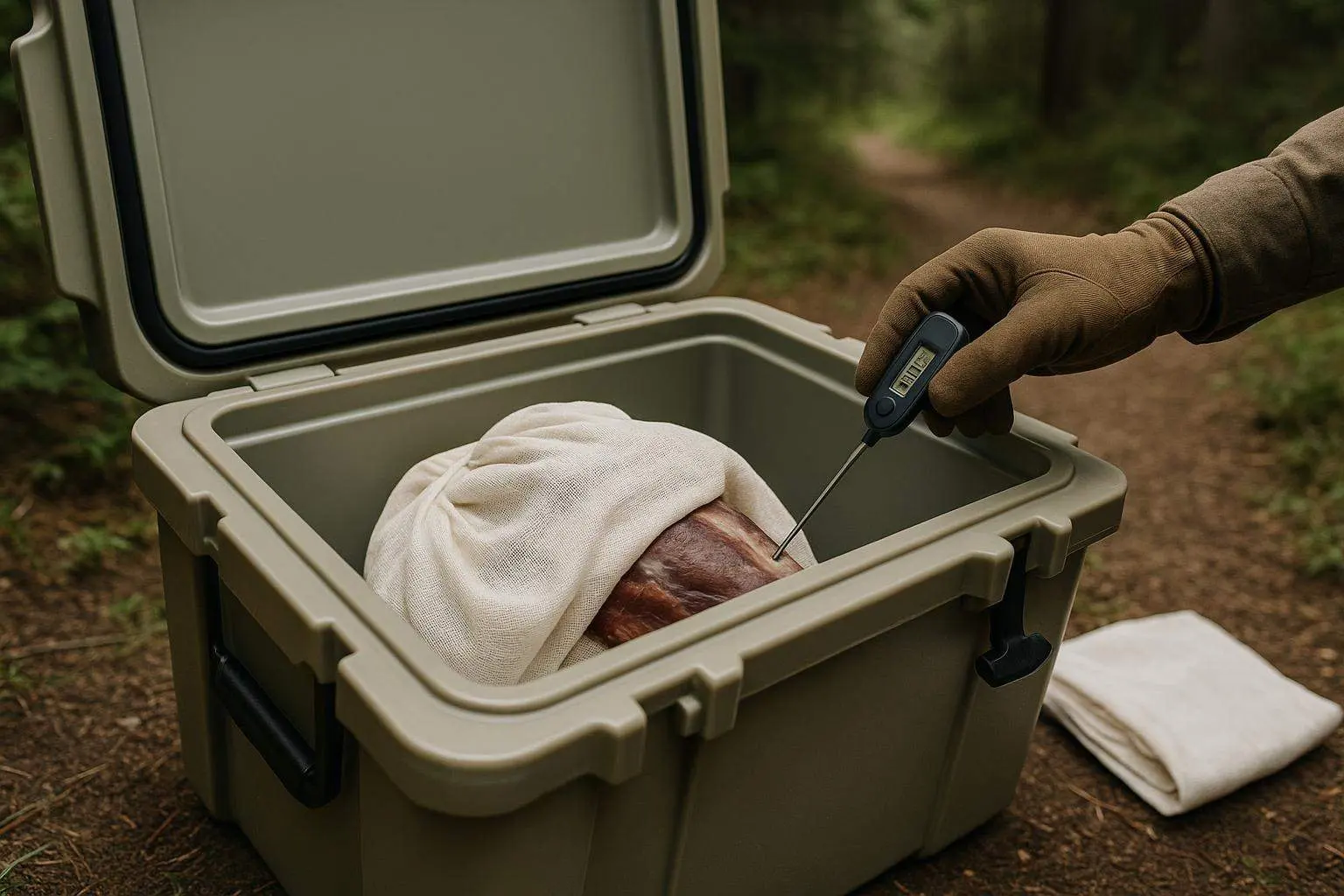
Cooling game meat is one of the steps in keeping it safe and fresh. This needs airflow, shade and a clean surface. You should prepare for this before the meat even needs to be cooled. Pack your game bags, a way to hang the carcass if allowed gloves, clean water for washing hands and a plan to keep flies and dirt away. A small thermometer can tell you about cooling speed than touch. It gives you data, not guesses.
Ice helps,. Use it carefully. The goal is to cool the meat- not soak it. Much water on the meat can lead to spoilage. A sided cooler holds better but is heavier. A soft cooler is easier to carry over ground. May not keep things cold for long. Always leave space in the cooler. A packed cooler can't circulate air. That weakens the cooling effect.
Never pack game meat tightly in bags. That traps heat and moisture. Don't leave the meat in a vehicle. That builds up heat. Makes things worse. Know the rules about transporting field-dressed animals. Some areas require parts to stay attached-like tags, heads or sex indicators. Rules vary by species and location so check them before you go.
Prioritize Cleanliness During Field Dressing
When you're dressing the game don't rush. Take your time. Keep your knife gloves and the meat free from dirt, hair and anything that could cause contamination. If your surface gets dirty during processing clean it away. Use a different tool. A small mistake can spread bacteria quickly. Ruin the harvest.
Use a clean work area. Keep it separate from gear. A sharp maintained knife makes the process easier and safer. Never try to fix tools in the field. If visibility is poor. Your grip is slipping, stop and secure the animal. Wait for conditions before continuing.
Keep the meat away from the hide the ground and tools that could carry bacteria. Use game bags that fit the cuts of meat properly. Plastic bags can work for moving chilled meat. They won't cool meat unless local rules allow it.
Assessing Conditions for Safety and Freshness
In climates or long recovery routes the risk to meat quality rises quickly. Shade helps a little. It doesn't replace airflow or fast transport. If you think the meat won't cool properly don't rely on a timeline. Reduce the load. Make trips. Call a hunting partner. Arrange transport that follows rules.
Ask yourself these questions during your recovery plan:
– Can the meat stay clean shaded and protected from insects?
– Can I transport it without losing quality?
– Do I have bags, ice, water and cooler space?
– Am I familiar with tagging rules, evidence-of-sex requirements, transportation limits and salvage rules for this season?
– If something goes wrong can someone find me. Reach my vehicle?
If many of these answers are "no " then it's time to rethink the recovery plan. Stuck in a recovery is not worth the risk to the meat, your safety or your mission.
Follow Regulatory Guidelines
Hunting laws cover topics-tagging, reporting, evidence of sex, chronic wasting disease precautions moving carcasses, edible parts, transport between areas and disposal of leftovers. Rules can change depending on the species the region and the way you're hunting.
You must know the rules for your hunting location and the species you're hunting. Check them before you go. Bring a printed copy. Save a version if cell service is weak. If a new rule comes out that differs from the old follow the instructions. When in doubt ask a conservation officer or a licensing office. Don't trust camp. Rumors.
Following the rules keeps you compliant. It supports conservation. Reporting and disease control rules help agencies track animal populations manage hunting pressure and reduce waste. Keep all paperwork safe and easy to access. You'll need it.
Equip Yourself
A small daypack might feel fine for a walk. It can become too small when you need to carry a large animal. Plan your load carefully. Think about the terrain the weather, the animal size and your strength. Choose gear that can handle the conditions without sacrificing safety.
Keep everything organized. Make sure gloves, game bags, lights, first-aid kits, navigation tools and communication devices are easy to reach. Keep knives secured so they don't shift while you're moving. Protect headlamp batteries-light is critical when night comes.
Even after the meat is gone your responsibilities aren't over. Follow the rules about gut piles, bones and other remains. Some areas have health or recreational rules that require disposal. Never drag remains near water, roads, camps or homes. The cleaner the recovery, the better, for the harvest the people involved and the environment.